
Here’s what happened
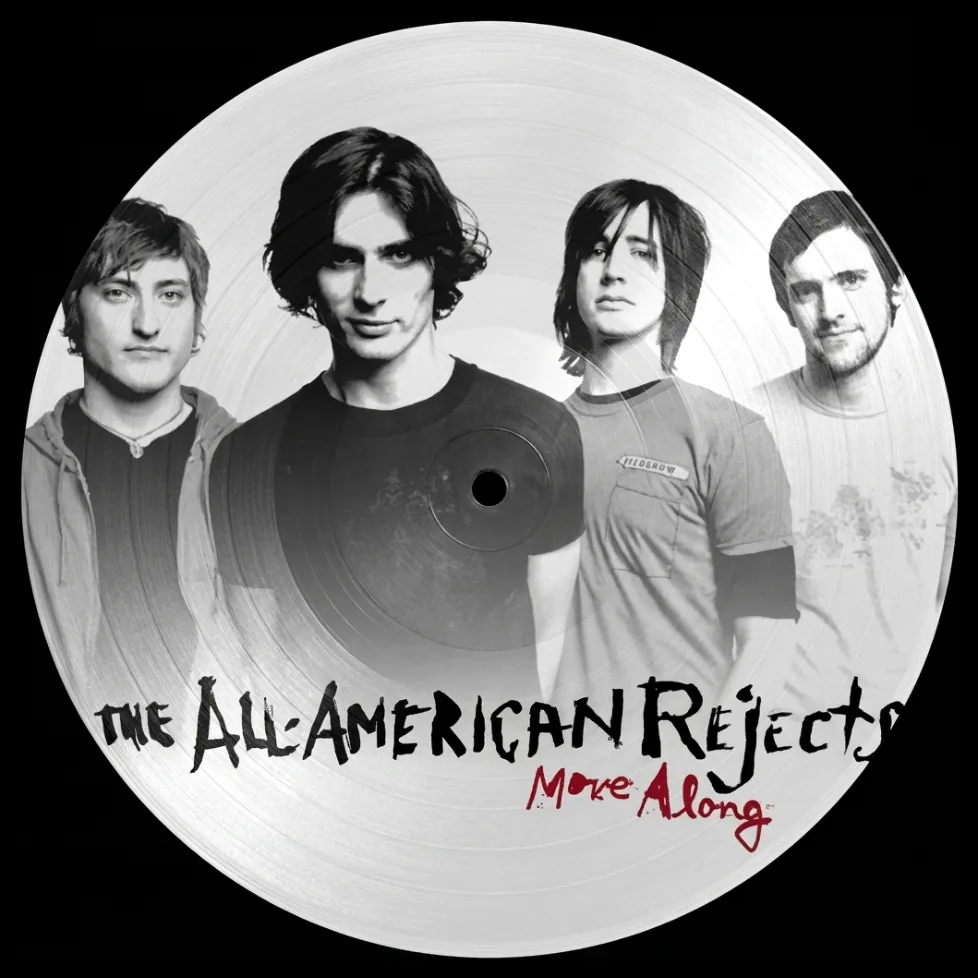
The All-American Rejects returned in 2026 with Sandbox, their first album in fourteen years, and two live runs: a second leg of the House Party Tour across the US, and the Recess Tour across Europe. The House Party format had gone viral the previous year by turning living rooms and backyards into venues.
We were asked to build and run a fan page network across all of it. Fifty pages, built from scratch, producing over 6,000 videos and 10 million views.
FIG. 01
Track breakdown: catalogue depth
Content pillars
Four pillars carried the network:
The base layer, and the most direct route from a scroll to a catalogue record.
Crowd footage from the House Party and Recess runs - proof of the room, and the format that consistently outperforms across artist fan pages.
Long-form conversation cut into short-form. The fanbase is largely people who grew up with these records, and podcast content reconnects them to who the band are now rather than only what they released in 2006.
Press and promo material from the Sandbox cycle, doing work music edits cannot.
FIG. 02
Across the network, as posted
The approach: building the audience before it was needed
The pages opened catalogue-weighted, which is what converts a scroll into a follow at higher rates than unfamiliar material.
This meant Sandbox songs arrived in front of an audience rather than searching for one.
But the sequencing was really about the calendar. Every follower acquired during the catalogue phase was a follower already in place when the tours began - which is what made the next part possible.
Tour amplification: the real-time loop
Ahead of the run, we seeded edits of the previous year’s House Party Tour. The format’s appeal is entirely visual - a band this size playing someone’s back yard - so archive footage did the work of explaining what the tour was to anyone who had missed it, and built anticipation among those who hadn’t.
Our accounts had already been set up for each region of the tour. Then, as each date happened, we ran it live. Story mentions, attendee posts and fan-captured footage from each show were collected in real time and pushed across the fan page network the same night.
The mechanic is a loop. A show in one city generates footage. That footage hits the network within hours, while it still reads as happening now rather than as documentation. Fans in the next cities see proof of what they are about to miss. Demand rises ahead of dates that have not happened yet, and those dates then generate the footage that drives the ones after.
The reading
And the results?
Fifty fan pages and over 6,000 videos delivered 10 million views at a $1.02 CPM.
The network moved from catalogue-led growth to frontline promotion to live real-time tour amplification without rebuilding infrastructure at any point. Because the accounts were owned, the same pages served all three objectives in sequence.